Become legally secure online – GDPR & Accessibility
A legally flawless website is often an important requirement today. GDPR, accessibility, legal notice requirements, data protection declaration - anyone who neglects these topics risks, in the worst case, paid warnings, legal fees and official consequences.
Legal security for your website
Many companies think this only happens to other people. Every year, numerous websites in Austria receive warnings - often because of small things that can easily be avoided with the right measures.
In addition to the direct costs of a warning, indirect consequences can also be noticeable: loss of trust among customers, damage to reputation or - if personal data is affected - official proceedings.
The good thing about it: With a little attention and a structured approach, the risk can be significantly reduced. And that is exactly our approach.
What does a website in Austria have to fulfill today?
GDPR – data protection
The GDPR has been in force since 2018 - and is increasingly being actively enforced. What this means specifically for your website:
Privacy Policy
You need a complete, understandable explanation of how you handle personal data. Important: A generic template is not enough. The explanation must reflect your actual situation. Do you use Google Analytics, Google Ads, Facebook Pixel or newsletter tools like Mailchimp? Any tool that collects or shares data should be mentioned.
Legal basis for data processing
Data may not just be collected - there always needs to be a legal basis. In most cases this is the consent of the user. This must be informed, voluntary and revocable at any time.
Cookies & Tracking
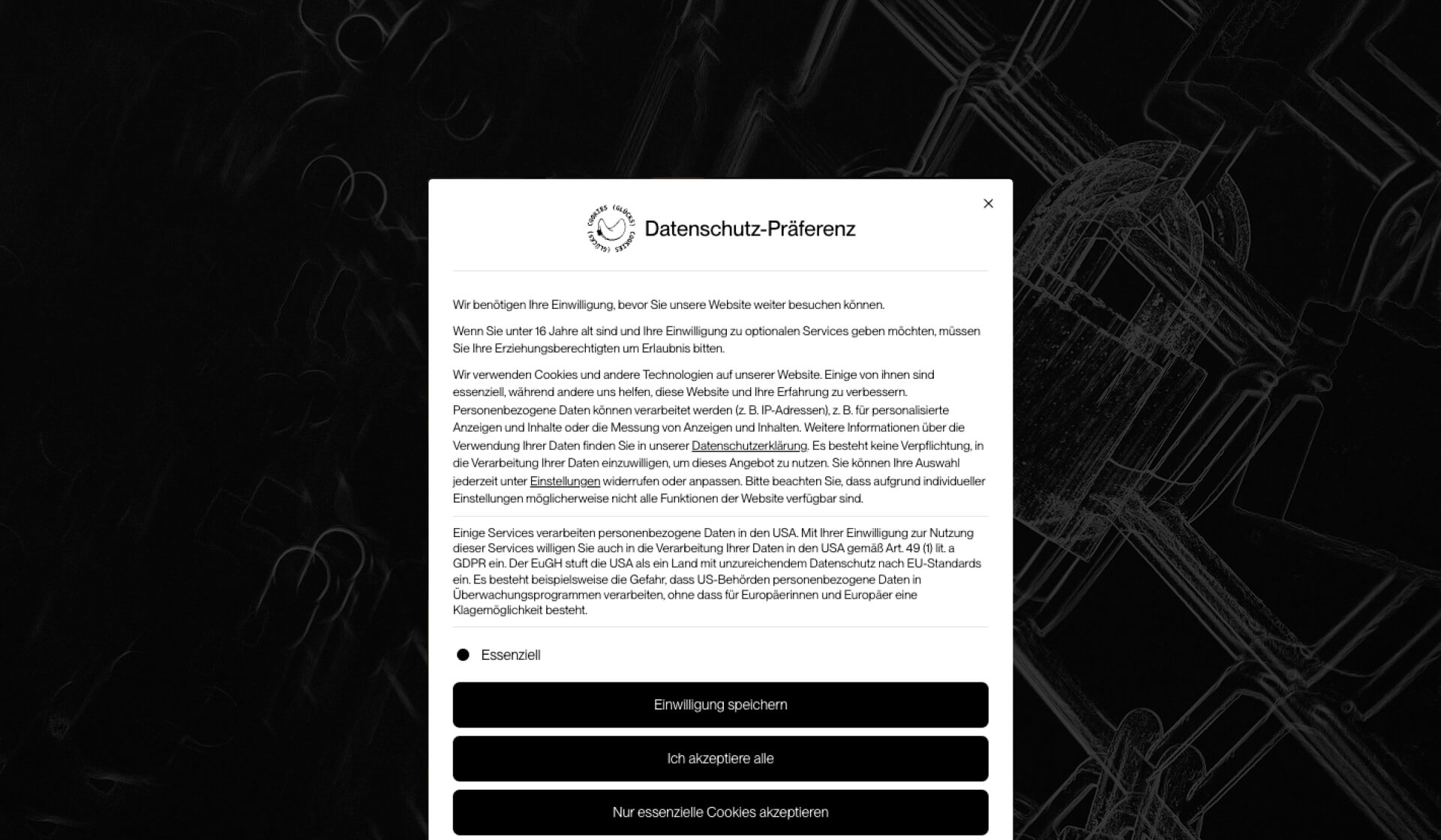
Anyone who uses tracking tools needs the active consent of website visitors - and that goes beyond a simple cookie banner. What is needed is a complete consent management system that makes rejecting just as easy as agreeing.
Information & Deletion
Anyone who processes personal data must be able to provide information upon request and delete data upon request. This sounds obvious, but in practice it requires clear internal processes.
Accessibility – BFSG 2025
For many companies, this topic is still new territory: The Accessibility Act (BFSG) will apply in full from June 2025. From this date, websites and online shops must be accessible to people with disabilities. This is a legal obligation, depending on various factors.
What this means in practice:
Visual accessibility
Visually impaired people use so-called screen readers to view websites. For this to work, you need a clean HTML structure with correct headings and lists, alt texts for all images, sufficient contrast ratios between text and background (at least 4.5:1) and the avoidance of purely color-based information.
Motor accessibility
All functions of a website must also be operable using the keyboard - without a mouse. This includes visible focus states (you can see which element is currently active) and the ability to exit all interactive elements.
Hearing impairments
Videos should have subtitles, podcasts should ideally be supplemented with a transcription.
Cognitive Accessibility
Clear, understandable language, consistent navigation and the absence of distracting animations help people with learning or concentration difficulties to fully grasp content.
Control and consequences: Compliance with the BFSG is checked by the authorities. Violations result in high fines. Additionally, inaccessible websites can lead to accusations of discrimination - a risk that goes well beyond the financial penalty.


How digitalists make your website legally compliant
-
1. Phase
Compliance Audit
We look at your website and check:– Is there a data protection declaration? Is it current?– Is there an imprint? Is it complete?– Do you use tracking tools? Are these compatible with data protection?– How is consent management?– Is the website barrier-free?– Are there other legal problems? -
2. Phase
Data protection strategy
Based on your website and your business, we develop a data protection strategy:– What data do you collect?– Do you have the legal basis for this?– What tools do you use? Are these GDPR compliant?– How does consent management work?– How to handle your requests for data insight & Deletion? -
3. Phase
Implementation
We implement and support:– A legally secure data protection declaration– A correct legal notice– The consent management tool (e.g. Cookiebot, OneTrust)– Correct configuration of all tracking tools -
4. Phase
Accessibility
We make your website BFSG compliant:– Correct HTML structure– Alt text for all images– Check color contrasts & adjust– Test keyboard navigation & fix– Videos with subtitles– Accessible Forms (Labels, Error Messages, etc.)